The Supermarket Is Not Neutral Territory — Here's How to Navigate It Like You Know That

Photo: Jules Verne Times Two, CC BY-SA 4.0, via Wikimedia Commons
You went in for chicken, broccoli, and Greek yogurt. You came out with those things, plus a bag of kettle chips, a multipack of granola bars with a 'protein' banner on the front, a two-for-one deal on a cereal you've never bought before, and somehow a scented candle. Sound familiar?
This is not a willpower failure. This is retail architecture working exactly as designed.
American supermarkets are among the most carefully engineered commercial spaces in existence. Billions of dollars in consumer research, behavioral psychology, and store design science go into determining where products sit, how aisles flow, what you smell when you walk through the door, and what catches your eye at checkout. None of it is accidental. And almost none of it is designed with your nutritional goals in mind.
Understanding the game being played is genuinely useful — not to make you paranoid about grocery shopping, but to give you a realistic map of the terrain so you can move through it with intention.
Why You Start With Produce (And What That's Really About)
The fresh produce section greets you at almost every major U.S. supermarket entrance, and it's not because fruits and vegetables are the most popular items. It's because starting your trip surrounded by colorful, wholesome food creates what researchers call a 'licensing effect.'
When shoppers begin their trip making virtuous choices — grabbing spinach, tossing some apples in the cart — they feel they've 'earned' less healthy choices later in the trip. Studies from the Journal of Marketing Research have documented this phenomenon: people who start with healthier items are measurably more likely to add indulgent products further into the store. The produce section isn't just a department — it's a psychological setup.
The fresh flowers near the entrance serve a similar purpose: they signal freshness, abundance, and quality. They make the store feel like a farmer's market. They lower your defenses.
The Perimeter Myth (And Why It's Only Half Right)
You've probably heard the advice to 'shop the perimeter' of the grocery store — the idea being that the outer edges house whole foods (produce, meat, dairy, bread) while the interior aisles are where processed products live.
There's some truth to this as a starting framework, but it's worth complicating.
First, the perimeter isn't uniformly healthy. Bakery sections line the outer walls of most stores, pumping the smell of fresh bread through the ventilation system strategically. Deli counters offer plenty of sodium-heavy processed meats alongside the genuinely good stuff. Dairy sections carry everything from plain Greek yogurt (great) to flavored yogurts with more sugar than a candy bar (not so great) — they're on the same wall.
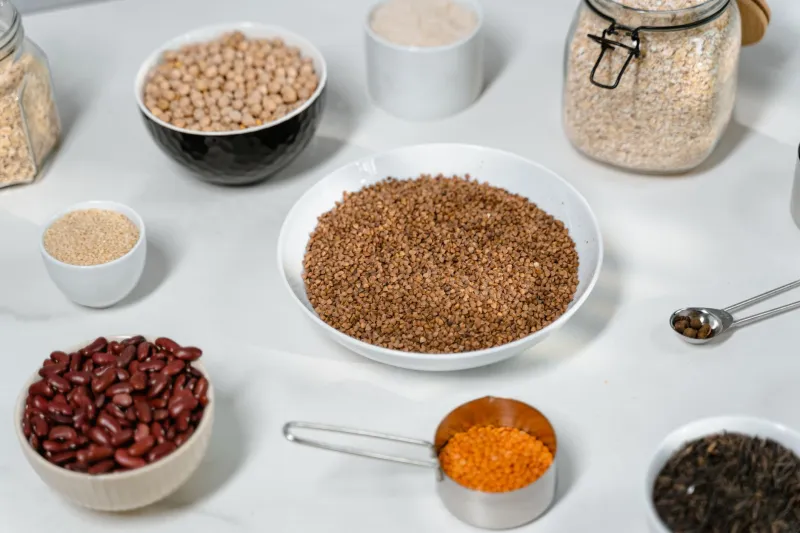
Second, the interior aisles aren't a nutritional wasteland. Canned beans, dried lentils, whole grain pasta, olive oil, nut butters, canned fish, and spices all live in the center of the store. Writing off the interior entirely means missing some of the most affordable, shelf-stable whole foods available.
The perimeter guidance is a decent starting heuristic, but a more useful mental model is: know what you're looking for before you enter any section.
Eye Level Is Prime Real Estate
Slotting fees — the payments food manufacturers make to retailers for favorable shelf placement — are a multi-billion dollar industry in the U.S. The products at eye level in any given aisle are there because a company paid for that position, not because they're the best choice.
This is especially significant in the cereal aisle, snack sections, and anywhere children's products are sold. Sugary cereals are consistently placed at children's eye level. Premium-positioned products at adult eye level are often those with the highest margins — which typically correlates with more processing, more packaging, and more added ingredients.
The most nutritious options in any given category — plain oats versus flavored instant packets, whole grain crackers versus refined flour varieties — are often on the bottom shelf or the top shelf. They're there because no one paid premium placement fees for them.
This means developing a habit of looking up and down, not just straight ahead, in any aisle you're navigating.
The 'Health Halo' Product Placement Strategy
Pay attention next time you're in the chip aisle or the cracker section. You'll almost certainly find products with words like 'multigrain,' 'baked,' 'plant-based,' 'made with real vegetables,' or 'gluten-free' positioned front and center, often near — or mixed in with — genuinely wholesome options.
This is intentional. Products with health-adjacent language benefit from proximity to legitimately nutritious items. Shoppers in wellness-oriented headspace, who are already reaching for good choices, are more likely to grab a product that looks like it belongs in the same category.
Flipping the package over and reading the actual nutrition facts and ingredient list is the only reliable defense against this. Ingredients are listed in descending order by weight — if refined flour, sugar, or some form of corn syrup appears in the first three ingredients, the health language on the front is largely cosmetic.
The Checkout Gauntlet
By the time you reach the register, you've been walking for twenty to forty minutes, you may be hungry, you're likely experiencing some degree of decision fatigue, and you're standing still for the first time since you entered. The checkout lane is engineered for exactly this moment.
Candy, gum, energy drinks, small snack bags, and impulse-buy items line every checkout lane because purchase rates in this location are extraordinarily high. You're depleted. The items are small. The prices seem trivial. And you're standing there with nothing to do but look at them.
Self-checkout lanes have reduced some of this (they typically have fewer or no product displays), which is one genuinely useful feature of a format that's otherwise mostly about labor cost reduction for retailers.
A Practical System That Actually Works
None of this requires you to become a suspicious, joyless shopper who treats every grocery run like a military operation. It just requires a bit of structure.
Make the list before you're hungry. Shopping hungry is a well-documented decision-making liability. Build your list from a place of clarity — ideally after a meal, when you can think about what your week actually needs rather than what sounds good right now.
Organize your list by store section, not by recipe. Grouping items by where they live in the store reduces the amount of time you spend wandering, which directly reduces exposure to products you didn't intend to buy.
Give yourself a 'pause rule' for anything not on the list. Before adding an unplanned item to your cart, give yourself thirty seconds. Ask whether it serves the meals you're building this week. Most impulse items don't survive thirty seconds of actual consideration.
Use the unit price, not the sale price, as your guide. Sales and bulk deals are designed to encourage purchasing volume beyond what you need. Unit pricing (cost per ounce, per serving, etc.) lets you compare accurately without being manipulated by promotional framing.
Explore the 'boring' aisles. Canned goods, dried legumes, frozen vegetables, whole grains — these sections get less foot traffic and less flashy marketing because the margins are lower. That's precisely why they tend to offer the best value and the most genuinely nutritious options in the store.
Shopping With Eyes Open
The grocery store doesn't have to be adversarial. Once you understand the logic behind its design, you stop feeling vaguely manipulated after every trip and start feeling like you're navigating it on your own terms.
The goal isn't to be immune to everything the store is doing — it's to walk in with enough awareness that the decisions you make are actually yours. Your cart should reflect what you planned to cook, what your body genuinely needs, and what aligns with how you want to eat. Not what was at eye level, on sale, or positioned next to something you actually needed.
That's not paranoia. That's just shopping smart.