Why Cooking at Home Hits Different — and Why Your Body Actually Knows It
The Meal That Tastes Better at Your Own Table
You've probably experienced this at some point: you order a dish at a restaurant that you also make at home, and the restaurant version is fine — maybe even impressive — but somehow your version feels more satisfying. You finish your plate at home and feel genuinely full. At the restaurant, you finish the same approximate meal and find yourself eyeing the bread basket twenty minutes later.
This isn't a fluke, and it's not just about ingredient quality or portion size, though those matter too. There's a layered set of reasons — physiological, psychological, and environmental — why home-cooked meals tend to register differently in your body than their restaurant equivalents. Understanding those reasons can actually help you eat better, feel fuller, and get more out of every meal you put together.
Your Body Starts Processing Before the First Bite
Here's something that gets overlooked in conversations about eating: digestion doesn't start when food hits your stomach. It starts earlier — much earlier — with something called the cephalic phase response.
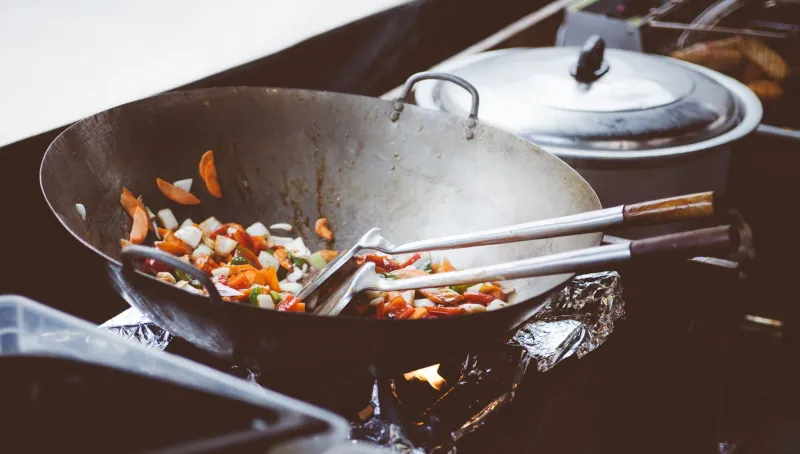
When you smell food cooking, when you chop vegetables and watch them hit a hot pan, when you taste as you go, your brain starts sending signals to your gut. Saliva production increases. Stomach acid begins to ramp up. Digestive enzymes get queued. Your body is essentially warming up for the meal before you sit down to it.
When you cook at home, you're almost always present for this process. You're in the kitchen. You're smelling, tasting, adjusting. By the time the food reaches your plate, your digestive system has had a meaningful head start.
At a restaurant, you typically arrive at the table, look at a menu, and then wait — sometimes for a while — before food appears. You're not in the kitchen. You're not smelling the cooking process. The cephalic phase response is muted. And when the food arrives, your body may be slightly less primed to process it efficiently, which can affect both how you absorb nutrients and how quickly satiety signals kick in.
The Stress Variable Nobody Talks About
Restaurant dining in the US involves a specific kind of low-grade ambient stress that most of us have just normalized. There's noise — often a lot of it. There's the social negotiation of splitting bills, navigating menus, managing timing across a table of people with different preferences. There's often a physical environment that's not particularly restful: hard surfaces designed to bounce sound, lighting calibrated for atmosphere rather than comfort, seating that prioritizes turnover.
None of this is catastrophic, but it does activate your sympathetic nervous system — the branch of your autonomic nervous system associated with alertness and stress response. And here's the problem: your parasympathetic nervous system is the one that runs digestion. These two systems don't operate equally well at the same time.
When you're eating in a stimulating, slightly stressful environment, your body is doing two things at once, and digestion gets the short end of it. You may eat faster, chew less thoroughly, and register satiety signals more slowly. At home, in a familiar environment where you're not performing or navigating social dynamics, your parasympathetic system gets to do its job. Digestion is more efficient. Fullness arrives on schedule.
The Portion Problem — and Why You Can't See It
Restaurant portions in the US are notoriously large, but that's not actually the whole story here. The more interesting issue is that restaurant portions are also unpredictable in ways that affect how your brain manages hunger.
At home, you plate your own food. You have a visual sense of what you're about to eat before you start eating it. Research on portion psychology consistently shows that when people can see the full scope of their meal upfront, they tend to pace themselves more effectively and recognize fullness more accurately.
At a restaurant, food often arrives in waves — appetizers, then mains, sometimes sides on separate plates. The total volume of what you're consuming isn't visible all at once, which makes it harder for your brain to calibrate. You're also more likely to keep eating past fullness because the social context of the meal is still ongoing and the plate is still in front of you.
Ingredient Control and What It Does for Satiety
Restaurant food tastes good partly because professional kitchens use more fat, salt, and sugar than most home cooks default to. This isn't a criticism — it's just physics. Fat carries flavor, salt amplifies it, and a little sugar rounds out savory dishes in ways that make them deeply appealing.
But those same elements, in quantities calibrated for palatability rather than nutrition, can actually work against satiety. High-sodium meals cause water retention and can mask genuine fullness. Dishes engineered for maximum flavor reward can override your body's natural stopping signals — you keep eating because it's delicious, not because you're hungry.
When you cook at home, you're the one controlling fat, salt, and sugar levels. You're also more likely to include ingredients that genuinely support fullness: fiber-rich vegetables, whole grains, adequate protein. Not because you're being virtuous, but because you're cooking for your own hunger rather than for a paying customer's taste experience.
Making Your Home Plate Work Harder
If you want to lean into the genuine advantages of home cooking, a few things are worth being intentional about.
First, be present in your kitchen while you cook. Don't outsource the sensory experience to background TV. Let yourself smell what's happening on the stove. Taste as you go. This isn't precious — it's physiologically useful.
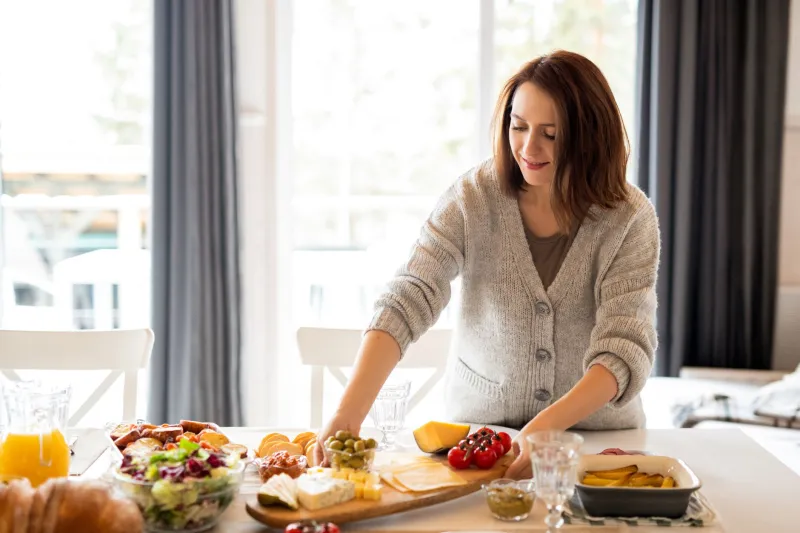
Second, plate your food fully before you sit down. Put everything on one plate so you can see the whole meal at once. This gives your brain accurate information about what you're about to eat.
Third, eat at an actual table, without screens, if you can manage it. The research on distracted eating is consistent: people who eat while watching something consume more and report lower satisfaction. Your home table, even if it's just you and a quiet room, is a better environment for satiety than your couch with Netflix.
Restaurant meals have their place — the social experience, the celebration, the occasional night off from cooking. But your home plate, made with care and eaten without distraction, is doing more for your body than you might realize.