Your Body Knows You're Full — It Just Hasn't Told Your Brain Yet

You've been there. You finish a meal, feel fine, go back for seconds — and then fifteen minutes later you're leaning back in your chair wondering why you thought that was a good idea. Sound familiar? You're not weak-willed or bad at "eating healthy." You're just human, and your body is running on a communication system that has a pretty significant delay built right into it.
Here's the thing: your stomach and your brain are constantly talking to each other, but it's not exactly a live chat. It's more like sending a letter. By the time the message arrives, you've already moved on.
The Science Behind the Lag (And Why It Matters)
When you eat, your digestive system gets to work immediately — breaking things down, absorbing nutrients, stretching to accommodate the volume of food coming in. But the signal that says hey, we're good down here doesn't reach your brain instantly. Hormones like leptin and cholecystokinin (CCK) take time to build up and travel through your bloodstream to reach the hypothalamus, the part of your brain that manages hunger and fullness.
Research consistently points to roughly a 20-minute window between the moment your stomach is physically satisfied and the moment your brain catches up with that reality. Twenty minutes. That's enough time to eat a second helping, demolish a basket of bread, or wander into the kitchen for "just a little something else."
This isn't a character flaw. It's biology. And once you understand it, you can actually work with it instead of against it.
Why Fast Eating Makes the Problem Worse
American eating culture doesn't exactly encourage slowing down. We eat at our desks, in our cars, in front of Netflix. We inhale lunch in ten minutes because we've got a 1 p.m. meeting. And when you eat quickly, you're essentially sprinting past your body's ability to send those satiety signals before you've already crossed the finish line.
The faster you eat, the more you can consume before that 20-minute window even has a chance to close. Studies have shown that people who eat quickly are significantly more likely to overeat and report feeling less satisfied after meals — even when they've consumed more food. It's a frustrating paradox: eating fast often leaves you feeling worse and fuller than you wanted to be.
Structuring Your Meals to Work With Your Biology
The good news? You don't need to obsess over portion sizes, weigh your food, or download another tracking app. You just need to give your body's communication system a fighting chance. Here's how to do that in a way that actually fits real life.
Start with volume, not restriction. Kick off your meal with something that takes up space and slows you down — a broth-based soup, a big leafy salad, or even a glass of water before you dig in. This gives your stomach something to work with early, and it naturally paces the rest of the meal.
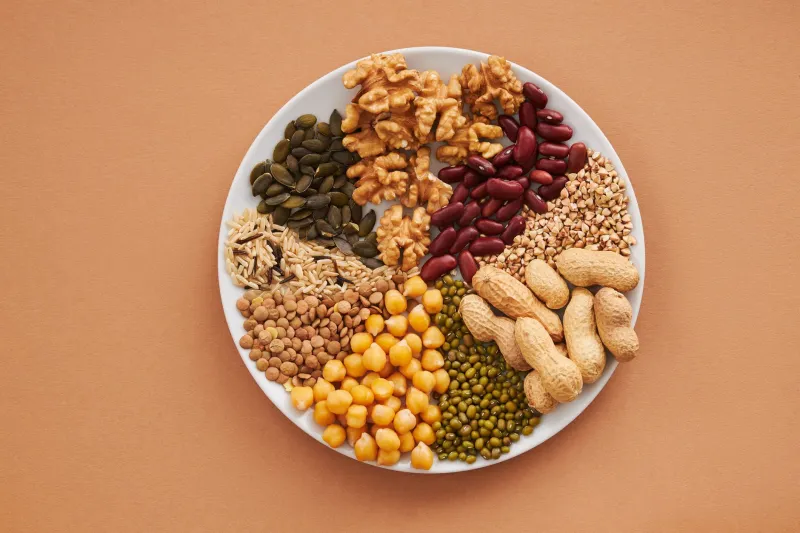
Build in fiber and protein from the start. Both of these nutrients are heavy hitters when it comes to satiety signals. Protein triggers CCK release, and fiber slows digestion, which means your gut has more time to send those "we're good" messages before you've gone back for round two. Meals from Wholesome Platter are built around exactly this — ingredients that genuinely keep you satisfied, not just temporarily full.
Put your fork down between bites. Sounds simple, almost annoyingly so. But physically setting down your fork or spoon between bites forces a natural pause. You chew more. You breathe. You actually taste your food. And you give your brain a better shot at catching up.
Make your meals last at least 20 minutes. Set a loose intention, not a timer. Have a conversation. Pour a glass of water and sip it throughout. Eat at a table instead of a screen. The goal isn't to turn dinner into a meditation retreat — it's just to slow the pace enough that your biology can do its job.
The Mindful Middle Ground
Mindful eating gets thrown around a lot in wellness circles, and it can start to feel like another thing you're supposed to be doing perfectly. But it doesn't have to be that complicated. The core idea is just this: pay enough attention to your meal that you can actually notice how you feel while you're eating it.
Instead of aiming for a specific portion size, try checking in with yourself halfway through your plate. Not am I done? but how do I feel right now? A little hungry still? Comfortable? Starting to feel satisfied? That check-in is more useful than any serving size chart, because it's based on your actual body in that actual moment.
This approach is sometimes called eating to 80% full — a concept borrowed from the Japanese idea of hara hachi bu, which translates roughly to stopping when you're about 80% satisfied. The logic is that by the time your brain fully catches up, that 80% becomes 100%. You end the meal feeling just right instead of stuffed.
What to Do When You've Already Eaten Too Much
First: let go of the guilt. One overfull meal isn't a crisis. It's information. If it happens regularly, it's worth looking at the pace and structure of your meals rather than blaming your appetite or your willpower.
A short walk after a big meal can actually help — not as punishment, but because gentle movement aids digestion and can reduce that uncomfortable bloated feeling. Staying hydrated helps too. And giving yourself permission to feel full without spiraling into regret makes it easier to tune back into your body's signals at the next meal.
Satisfaction Is the Point
Here's what often gets lost in conversations about portion control: the goal isn't to eat less. The goal is to feel genuinely satisfied — nourished, comfortable, energized. When you structure meals thoughtfully, slow down enough to let your body communicate, and pay attention to how you actually feel rather than how much is on your plate, you often end up eating the right amount naturally.
Your body isn't trying to trick you. It's just working on a slight delay. Meet it halfway, and you might be surprised how much easier the whole thing gets.