Still Hungry After a 'Healthy' Meal? Here's What's Actually Going On
You did everything right. You skipped the drive-through, cooked at home, and put together something that looked straight out of a wellness magazine. Lean protein, leafy greens, maybe some brown rice on the side. And then — an hour later — you're standing in front of the open fridge wondering why your stomach is already sending distress signals.
You're not broken. You're not weak. You're just dealing with a gap that a lot of health-forward eating advice completely glosses over: the difference between a meal that's nutritionally sound and one that actually satisfies you.
Those two things are not automatically the same. And once you understand why, building meals that check both boxes gets a whole lot easier.
Your Body Has More Than One Definition of 'Full'
Here's where it gets interesting. Satiety — that settled, content feeling after eating — isn't triggered by a single switch. It's actually a layered process involving your stomach, your gut, your hormones, and yes, even your brain.
When you eat, your stomach physically stretches and sends volume signals to your brain. At the same time, your gut starts releasing hormones like GLP-1 and PYY that communicate "hey, we got something here." Leptin, produced by fat cells, plays a longer game — helping regulate hunger over hours and days. And then there's ghrelin, the hunger hormone that drops after eating but can spike back up faster than you'd expect if certain needs aren't met.
The catch? All of these signals take time — roughly 15 to 20 minutes — to fully register. But they're also influenced by what you ate, not just how much. A 500-calorie meal built one way can leave you satisfied for hours. Built another way, it barely makes a dent.
The Calorie Count Isn't the Whole Story
One of the biggest misconceptions in healthy eating is that if you hit your calorie target, your hunger should cooperate. In reality, calorie density and nutrient density are two very different things — and your body cares about both.
A large bowl of plain salad greens might be low in calories, but it's also low in the macronutrients that actually slow digestion and trigger satiety hormones. Protein and fat are the heavy hitters here. Protein, in particular, is the most satiating macronutrient — it stimulates the release of appetite-suppressing hormones and takes longer to break down than simple carbs. Fat slows gastric emptying, meaning food literally stays in your stomach longer. Fiber adds bulk and feeds the gut bacteria that play a role in hunger regulation.
When a meal is light on all three — which a lot of "clean eating" plates can be — your body processes it quickly and starts asking for more before you've even cleared the table.
Texture and Satisfaction Are Not Soft Science
This part gets overlooked constantly, and it matters more than most people realize. The sensory experience of eating — the crunch, the chew, the richness — plays a real role in how satisfied you feel when you're done.
Research suggests that meals requiring more chewing are associated with greater feelings of fullness. There's also something called "sensory-specific satiety" — the idea that your brain registers satisfaction partly through the variety and pleasure of what you're eating. When a meal is monotonous in texture or flavor, your brain may not fully register it as a complete eating experience, even if the calories are there.
This is why a smoothie, even a nutrient-packed one, often doesn't hold you the same way a full meal does. Drinking your calories bypasses a lot of the chewing and sensory engagement that helps your brain say "okay, we're done here."
What Actually Builds a Satisfying Plate
So what does a genuinely satisfying healthy meal actually look like? It's less about following a rigid formula and more about making sure a few key elements show up together.
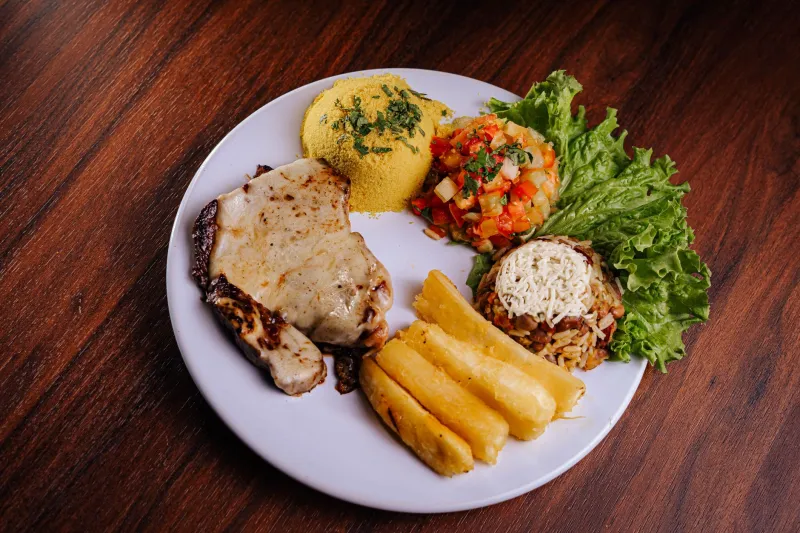
Anchor it with protein. Aim for at least 25–30 grams per meal. That might look like a palm-sized portion of salmon, a couple of eggs plus some Greek yogurt, or a generous scoop of legumes alongside a smaller amount of animal protein. This is the single biggest lever you can pull for staying full longer.
Don't fear fat — use it strategically. A drizzle of olive oil, some avocado, a handful of nuts, or a tahini-based dressing aren't indulgences. They're satiety tools. Fat slows things down and makes your meal feel complete in a way that fat-free versions simply don't.
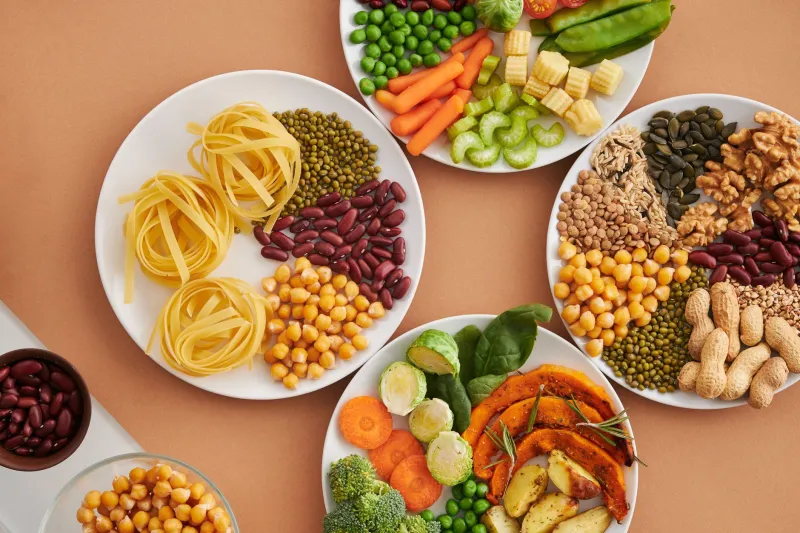
Build in bulk with fiber-rich foods. Non-starchy vegetables, beans, lentils, and whole grains all contribute fiber that physically fills your stomach and feeds your gut. The goal isn't to pile on raw greens — it's to include foods that have substance and staying power.
Add texture on purpose. Roast your vegetables instead of steaming them. Toss in some seeds or nuts. Include something with a bit of chew — farro, lentils, roasted chickpeas. The more your meal engages your senses, the more satisfying it tends to feel.
Slow down. It sounds almost too simple, but eating without distraction and actually chewing your food gives those satiety signals time to catch up. Eating at your desk or in front of a screen is a fast track to overeating because your brain never fully registers the meal.
The Psychological Layer You Can't Ignore
There's one more piece here that doesn't get nearly enough airtime: the role of enjoyment. If you finish a meal feeling like you ate something virtuous but not something you actually wanted, your brain may keep searching for satisfaction — even when your stomach is technically full.
This is sometimes called the "hedonic hunger" loop, and it's why restrictive eating often backfires. When meals feel like a compromise — like you traded pleasure for health — your brain registers a kind of deficit that food cravings are designed to fill.
The good news is that this isn't a character flaw. It's just how human brains work. And the fix isn't to eat whatever you want with no thought to nutrition. It's to build meals that are both nourishing and genuinely enjoyable — which is entirely possible once you stop treating those two goals as opposites.
The Bottom Line
Hunger after a healthy meal isn't a sign that healthy eating doesn't work. It's usually a sign that the meal was missing something — protein, fat, fiber, texture, or just plain enjoyment. When you start building plates with all of those in mind, "healthy" and "satisfying" stop feeling like a trade-off and start feeling like the same thing.
And that's when eating well actually becomes sustainable.