Why You're Starving Two Hours After a Huge Restaurant Meal
It's one of the more confusing experiences in modern eating: you leave a restaurant feeling genuinely stuffed — maybe even a little too stuffed — and then somewhere around 9 p.m. you're standing in front of the fridge wondering why your stomach is growling again. You know you ate enough. The calorie math doesn't add up. So what gives?
This isn't just you, and it's definitely not a character flaw. There's a specific reason why so many restaurant meals — even the big, indulgent ones — set you up for a hunger rebound a couple of hours later. And once you understand what's happening, you can start making smarter choices without giving up the pleasure of eating out.
Calories and Satisfaction Are Not the Same Thing
Here's the part the calorie-counting crowd tends to miss: your body doesn't run on calorie math. It runs on signals — hormones, nerve responses, and nutrient receptors that are constantly communicating with your brain about what you've eaten and whether you actually got what you needed.
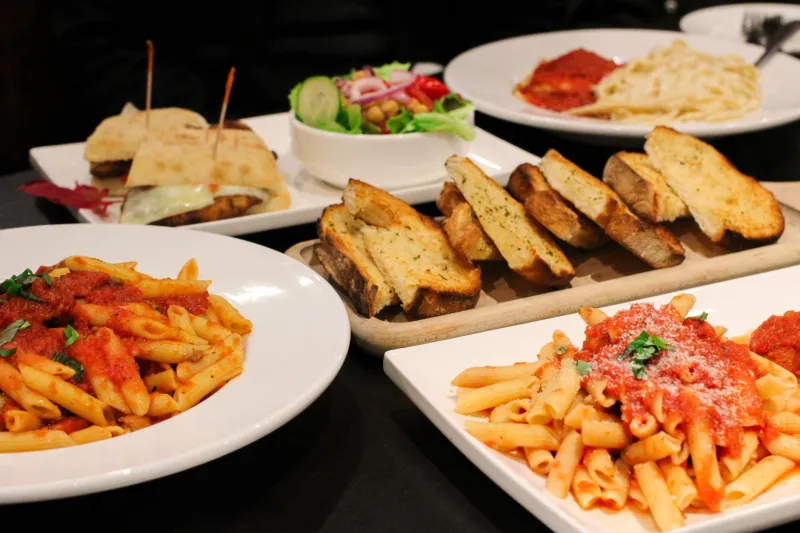
When you eat a meal that's high in calories but low in actual nutrients — think a basket of white bread, a creamy pasta loaded with refined flour, or a plate of fried appetizers — your gut gets a flood of energy without much else to work with. There's not a lot of fiber slowing digestion down. There's not much protein triggering the release of satiety hormones like peptide YY or GLP-1. And the refined carbohydrates spike your blood sugar quickly, which feels great for about an hour before it crashes and sends hunger signals firing again.
This is the core of what nutrition folks call nutrient density — the ratio of vitamins, minerals, fiber, and protein relative to the calories in a food. A massive plate of fettuccine Alfredo might clock in at 1,200 calories, but it's delivering those calories in a form your body processes and clears quickly. A 600-calorie meal built around lean protein, vegetables, and legumes? That one sticks around.
What Ultra-Processed Ingredients Do to Your Hunger Hormones
Most chain restaurants — and even a lot of independent spots — rely heavily on ultra-processed ingredients. We're talking about refined oils, high-fructose corn syrup hiding in sauces, emulsifiers in dressings, and flavor enhancers that make food taste intensely good but don't do your satiety hormones any favors.
Research has shown that ultra-processed foods can actually interfere with the normal hormonal feedback loop that tells your brain you've had enough. Ghrelin, the hormone that drives hunger, doesn't drop the way it should after a meal heavy in these ingredients. Meanwhile, leptin — the hormone that signals fullness — can get blunted over time with repeated exposure to highly processed eating patterns.
There's also something worth knowing about palatability engineering. Food scientists working for large restaurant chains are genuinely skilled at creating flavors that keep you wanting more — combinations of fat, salt, and sugar that hit reward centers in the brain without triggering the same "okay, I'm done" response that whole foods tend to produce. You're not weak for wanting more. You're responding exactly the way those dishes were designed to make you respond.
The Fiber Gap Nobody Talks About
One of the quietest reasons restaurant meals leave you hungry is that they're almost always fiber-poor. Fiber is slow. It bulks up in your digestive tract, slows the absorption of sugar into the bloodstream, and physically stretches your stomach in a way that sends fullness signals to the brain.
The average American already falls well short of the recommended 25–38 grams of fiber per day, and restaurant meals rarely help close that gap. A typical dinner out — bread, entrée, maybe a shared dessert — might deliver 4 or 5 grams of fiber at best. Without that fiber, digestion moves fast, blood sugar swings hard, and hunger comes back sooner than it should.
So What Can You Actually Do About It?
The good news: you don't have to stop eating out. You just need a slightly different game plan for how you approach the menu.
Start with something that works for you, not against you. A broth-based soup, a simple green salad with olive oil and vinegar, or a vegetable-forward appetizer before your main gives your gut something fibrous and filling to work with before the heavier stuff arrives. Studies have shown that eating a low-calorie, high-fiber starter can meaningfully reduce how much you eat overall — and more importantly, how long you stay satisfied.
Build your entrée around protein. Grilled fish, chicken, legume-based dishes, or a lean steak paired with vegetables will keep you fuller longer than a pasta-forward or fried plate of the same calorie count. Protein has the highest thermic effect of any macronutrient — your body actually burns more energy digesting it — and it's the most reliable trigger for satiety hormones.
Ask for swaps without guilt. Most restaurants will sub steamed or roasted vegetables for fries, swap white rice for a salad, or bring sauce on the side. These aren't precious requests — they're just smarter builds. You're still eating out, still enjoying yourself, still ordering what appeals to you. You're just nudging the nutrient density in a direction your body will thank you for later.
Watch the liquid calories. Sweetened cocktails, sodas, and even some "healthy" juices deliver a significant sugar load without any satiety benefit. They spike blood sugar fast and contribute to the crash-and-crave cycle. Water, sparkling water, or unsweetened drinks keep you hydrated without adding to the hunger rebound.
Don't skip the leftovers strategy. Restaurant portions in the US are notoriously oversized — often two to three times a reasonable single serving. Asking for a to-go box at the start of the meal and setting half aside before you eat isn't deprivation. It's just not letting the size of the plate make your decisions for you.
The Bigger Picture
Eating out is one of life's genuine pleasures, and nobody here is suggesting you turn every dinner into a nutrition audit. But understanding why certain meals leave you feeling hollow a few hours later gives you real power over the experience. You can enjoy a restaurant meal and feel genuinely satisfied afterward — not just full in the moment, but actually nourished in a way that carries you through the evening without a snack-hunting mission at 10 p.m.
That's the difference between eating a lot and eating well. And honestly? Once you start building meals around that distinction, eating out starts to feel a whole lot better — during and after.