I Ate Something Fermented at Every Meal for a Week — Here's My Honest Report
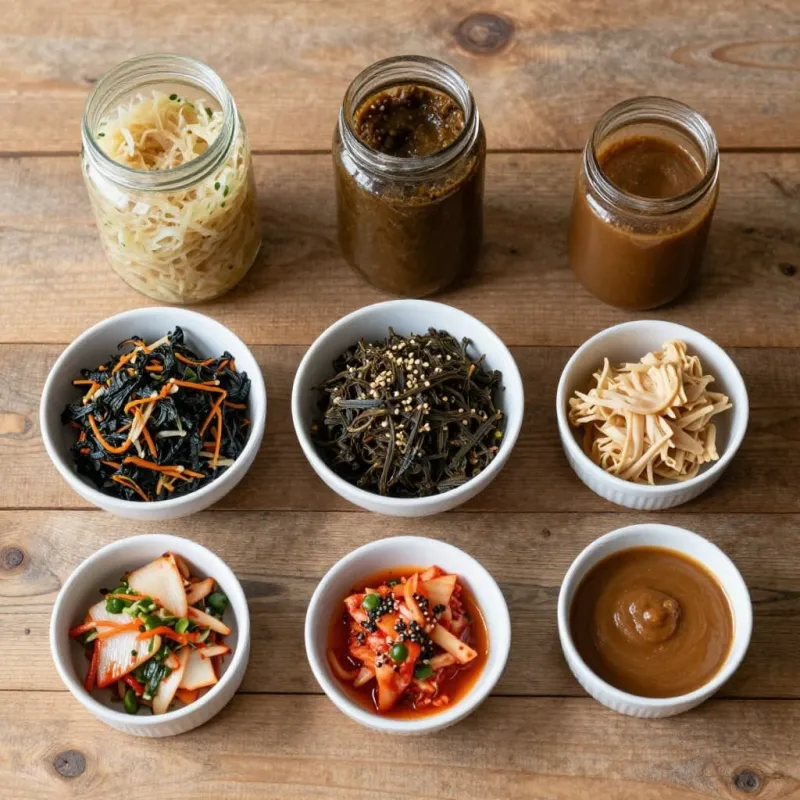
Photo: fermented foods kimchi kefir sauerkraut miso bowls table, via powerfulsight.com
Gut health content is everywhere right now, and most of it falls into two camps: miracle-cure enthusiasm or eye-rolling dismissal. I wanted a third option, so I ran a small experiment on myself — one fermented food at every meal, every day, for a week — and talked to a registered dietitian about what's actually supported by science versus what's still up in the air.
The Rules I Set for Myself
Keep it simple and supermarket-accessible: kimchi, plain kefir, miso paste, refrigerated sauerkraut, plain Greek yogurt with live cultures, and tempeh. I kept everything else about my eating roughly the same, because a week of fermented foods plus a simultaneous sugar detox would tell me nothing useful. I also checked labels — many shelf-stable sauerkrauts and pickles are pasteurized, which kills the cultures. Refrigerated cases are where the live stuff lives.
Days 1–2: The Adjustment Period
Nothing dramatic, which is itself worth noting. My breakfast became kefir with berries; lunch got a forkful of kimchi on the side; dinner might be miso soup or tempeh tacos. By day two, I noticed some extra bloating — my dietitian contact wasn't surprised. 'A sudden increase in fiber and fermented foods can temporarily shift things around,' she told me. 'The microbiome doesn't remodel overnight, and some gas during the transition is normal.'
Days 3–5: Settling In
The bloating faded. What I noticed instead was less tangible: my afternoon snack cravings — usually around 3 p.m., usually for something crunchy and salty — were quieter. I can't prove causation from a sample size of one, and I won't pretend otherwise. But the meals themselves were more satisfying, likely because fermented foods pushed me toward eating more vegetables, legumes, and whole foods in general.
Days 6–7: The Honest Verdict
Digestion: smoother than baseline, in a general way. Energy: no miracles, but no crashes either. Cravings: modestly reduced, plausibly because I was eating more protein and fiber at each meal. Mood: I'd like to claim the gut-brain axis transformed my week, but honestly, eating intentional, home-cooked meals seven days in a row probably did more for my head than the kimchi did.
What the Science Actually Says
My dietitian was refreshingly measured. The strongest evidence: fermented foods reliably deliver beneficial live microbes and, in a 2021 Stanford study, a diet rich in them increased microbiome diversity and reduced inflammatory markers over just ten weeks. That's real. What's still unproven: specific strains fixing specific conditions, probiotic supplements matching whole foods, and most of the sweeping claims on social media. 'Think of it as supporting a garden, not planting a forest,' she said.
If You Want to Try It
Start with one fermented food a day, not four. Choose refrigerated products with 'live and active cultures' on the label. And treat the week like I did — as an experiment in eating more whole, traditional foods, not a cure. The kimchi won't change your life. But the habit of putting something alive and old-fashioned on your plate every day? That might quietly improve it.