The $16 Bowl of Rice: What You're Really Paying For at the Fast-Casual Counter
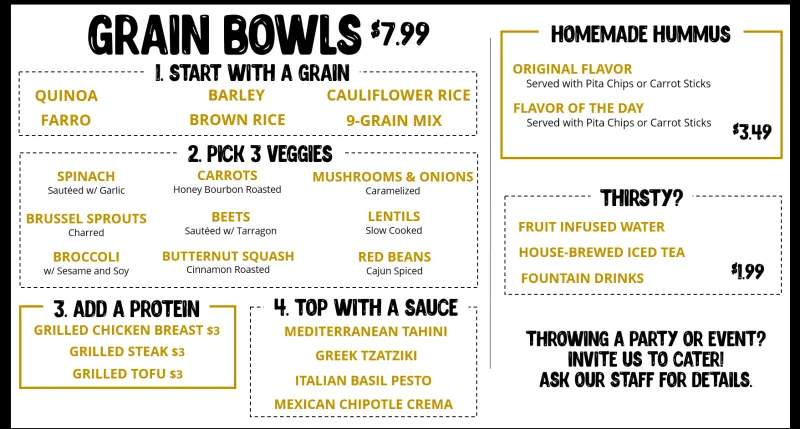
Photo: fast casual grain bowl restaurant counter menu, via grainbowl.com
There's a particular species of restaurant menu that has quietly colonized every American city. You know the one. The typeface is minimalist, the bowls have names like 'Golden Harvest' or 'Ancient Grains + Greens,' and a lunch that is, at its core, rice, beans, and vegetables runs you sixteen dollars before the add-ons start.
I'm not here to say these places are bad. Some of them make genuinely good food. But we should be honest about what the transaction actually is, because the wellness branding is doing a lot of heavy lifting — and charging you by the pound for it.
The Ingredient Math Nobody Shows You
Run the numbers on a typical grain bowl: half a cup of cooked quinoa costs roughly 40 cents, chickpeas about 30, roasted vegetables maybe 75, a scoop of greens pennies, and a tahini drizzle another 50. You're looking at about two dollars in ingredients. Even accounting for rent, labor, and packaging — real costs that deserve to be covered — the markup on the raw materials of a 'power bowl' is dramatically steeper than on, say, a burrito at the chain down the street, even though the food is nearly identical in composition.
What you're paying the difference for is a feeling. The word 'power' on a menu is not a nutrient. 'Harvest' is not a cooking technique. These are adjectives attached to inexpensive ingredients precisely because inexpensive ingredients need an aspirational story to command a premium price.
When the Bowl Is Genuinely Worth It
Here's my honest framework, because I eat at these places too:
Buy the bowl when it solves a real problem. If it's 12:40 on a workday and the alternative is the drive-thru, a vegetable-and-protein-forward bowl for $14 is a defensible purchase. Convenience has value, and a meal built on whole ingredients beats most other lunch options at that price point.
Buy it when the sourcing is actually different. Some fast-casual operators pay meaningfully more for regenerative produce, pastured proteins, or fair-trade grains. If a menu articulates that specifically — with names and practices, not just vibes — some of that premium is doing real work in the world.
Skip it when you're buying the aesthetic. If you could make the same bowl at home in twelve minutes with pantry staples, and you're choosing the $16 version because the packaging photographs well, that's not lunch. That's merch.
The Home Version Test
Here's a simple exercise: order your usual bowl once and write down exactly what's in it. Then price those ingredients at your regular grocery store. For most bowls, you can replicate them for under $4 a serving if you cook grains in batches and keep a jar of tahini-lemon sauce in the fridge.
That doesn't mean never buy the bowl. It means buying it as a choice rather than a default — and knowing that 'wholesome' is something you can build in your own kitchen for a fraction of the price, no branding required.