Cold Storage, Hot Nutrition: Why Your Freezer Aisle Deserves Way More Credit
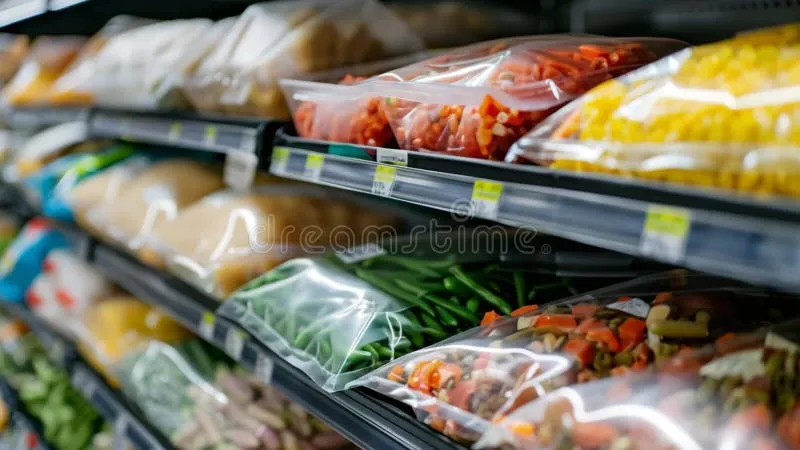
Photo: frozen vegetables colorful bags in grocery store freezer aisle, via thumbs.dreamstime.com
Walk into almost any grocery store in America and you'll notice something: the produce section gets the prime real estate. It's the first thing you see, bathed in soft lighting, misted with water, stacked into colorful pyramids. The frozen vegetable aisle, on the other hand, is typically tucked somewhere in the back — fluorescent, humming quietly, and largely overlooked by shoppers who've convinced themselves that buying fresh is the only responsible choice.
Here's the thing, though. That assumption? It's not exactly backed by science.
Frozen vegetables have been quietly winning the nutrition battle for decades, and most of us have been too busy squeezing avocados in the produce section to notice.
What Actually Happens Between Farm and Fork
Let's talk about what 'fresh' really means by the time it reaches your cart.
Most fresh produce in U.S. supermarkets travels an average of 1,500 miles before landing on a shelf. During that journey — and during the days it sits in display cases — nutrients are actively breaking down. Vitamins like C and B-complex are particularly vulnerable to heat, light, and time. A study published in the Journal of the Science of Food and Agriculture found that some fresh vegetables lose anywhere from 15 to 55 percent of certain vitamins within just a few days of harvest.
Spinach, for instance, can lose up to half its folate content within a week of being picked. Green beans start shedding vitamin C almost immediately after harvest. That 'fresh' broccoli that's been in your crisper drawer for four days? Nutritionally, it may already be a shadow of what it was.
Frozen vegetables operate on an entirely different timeline.
The Flash-Freeze Difference
Here's how it works: vegetables destined for the freezer section are typically harvested at or near peak ripeness — the point when nutrient density is at its highest. Within hours of picking, they're blanched briefly (a quick dip in hot water or steam to stop enzyme activity) and then flash-frozen at extremely low temperatures.
That rapid freeze locks in nutrients almost immediately. The cellular structure is preserved. The vitamins stay put. And unlike fresh produce sitting in transit or under grocery store lighting, frozen vegetables aren't continuing to degrade on their way to you.
A 2017 study from the University of California, Davis compared the nutritional content of fresh, fresh-stored (refrigerated for five days), and frozen versions of common vegetables including corn, spinach, carrots, broccoli, green beans, peas, and blueberries. The results? Frozen versions were nutritionally comparable — and in several cases, measurably better — than the fresh-stored versions.
That's not a fluke. That's food science doing exactly what it's supposed to do.
The Blanching Question
Fair point: blanching does cause some nutrient loss before freezing — particularly water-soluble vitamins like C and some B vitamins. This is real, and worth acknowledging.
But here's the context: that initial loss is relatively small compared to the ongoing degradation that happens to fresh produce over days of transport and storage. You're essentially trading a modest upfront loss for dramatically better long-term preservation. For most vegetables, the net nutritional outcome still favors frozen over fresh-that's-been-sitting-around.
And for vegetables you're planning to cook anyway — soups, stir-fries, roasted sheet pan dinners — the blanching step that happens pre-freeze is essentially the same thing you'd be doing in your kitchen. You're not losing anything you weren't going to lose regardless.
The Budget Reality Nobody Talks About Enough
Beyond the nutrition conversation, there's a very practical reason to rethink frozen: cost and waste.
A 16-ounce bag of frozen broccoli florets typically runs between $1.50 and $2.50 at most U.S. grocery chains. A comparable amount of fresh broccoli crowns can easily cost twice that — and that's before you factor in the portion you'll trim off and toss, or the half-used head that turns yellow in your refrigerator three days later.
Food waste in American households is estimated at roughly 30 to 40 percent of the food supply, according to the USDA. A significant chunk of that is fresh produce that spoils before it gets used. Frozen vegetables sidestep that problem entirely. You use what you need, reseal the bag, and the rest stays perfectly preserved for weeks.
For anyone trying to eat well without watching money drain out of their wallet, that matters enormously.
Building Real Meals Around Frozen Produce
If you're wondering how to actually make this work in your kitchen, the good news is that frozen vegetables are genuinely versatile. A few approaches worth considering:
For weeknight dinners: Frozen peas, edamame, corn, and spinach can go directly into soups, grain bowls, and pasta dishes without any thawing. They cook fast and add real nutritional weight to simple meals.
For smoothies: Frozen spinach, kale, and cauliflower (yes, cauliflower) blend seamlessly into smoothies without altering flavor significantly. They're already the right temperature and eliminate the need for ice.
For stir-fries: Frozen broccoli, snap peas, and bell pepper strips work beautifully in a hot wok or skillet. The key is high heat and not overcrowding the pan — let the moisture cook off so you get some color rather than steam.
For roasting: This one surprises people. Frozen vegetables can be roasted straight from frozen at high heat (425°F or so). They won't caramelize quite as dramatically as fresh, but they'll get tender and slightly crispy at the edges — totally satisfying.
A Few Things to Watch For
Frozen vegetables are not a nutritional free-for-all, and there are a couple of things worth checking before you toss a bag in your cart.
Flip the package over and look at the ingredient list. The only ingredient should be the vegetable itself. Some frozen products — particularly 'seasoned' or 'steam-in-bag' varieties — come loaded with sodium, butter sauces, or additives that quietly undermine the nutritional value. Plain frozen vegetables are your best bet. Season them yourself.
Also worth noting: not every vegetable freezes with equal results. Leafy greens like spinach and kale hold up beautifully. Heartier vegetables like broccoli, peas, carrots, and Brussels sprouts do great. Delicate things like cucumber, lettuce, or raw tomatoes don't freeze well and aren't typically sold that way — so that's not really a comparison you'll encounter in practice.
Give the Freezer Aisle Its Due
There's nothing wrong with buying fresh produce — especially when it's local, in season, and you know you'll actually use it before it turns. A farmers' market haul in July is a genuinely different experience than a plastic clamshell of strawberries in January.
But the blanket assumption that fresh always beats frozen? That's marketing talking, not nutrition science.
The freezer aisle is one of the most practical, affordable, and legitimately nutritious sections of the entire supermarket. Building your meals around it — or at least making it a consistent part of how you shop — is one of the quieter, smarter moves you can make for your long-term wellness. No guilt required.