Your Crisper Drawer Is a Waiting Room, Not a Fridge: Fixing the Great Produce Die-Off
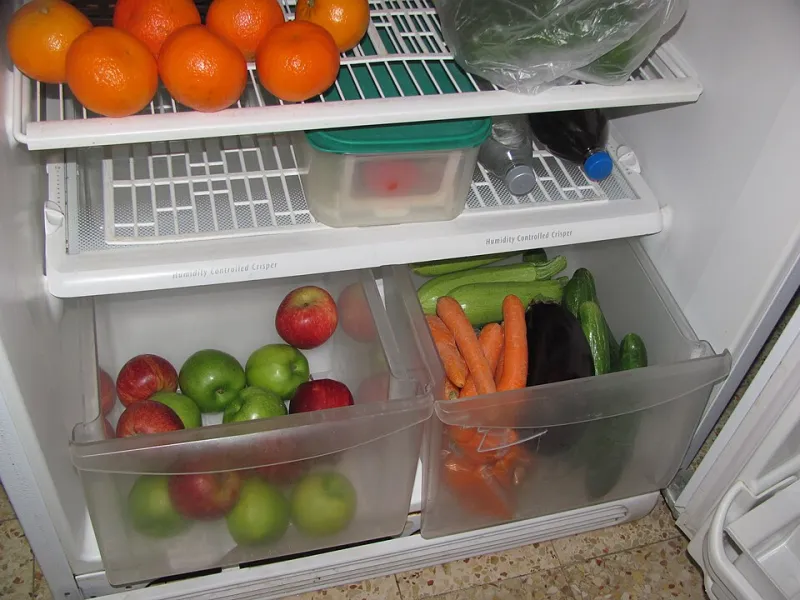
Photo: Yoninah, CC BY-SA 4.0, via Wikimedia Commons
There's a specific kind of grief that comes from opening the crisper drawer on a Friday evening and finding the spinach you swore you'd use turned into something closer to pond mulch. The avocados have gone from rock-hard to compost-adjacent with no stop at ripe in between. The cilantro is a memory.
If this sounds familiar, you're not careless — you're fighting biology without a system. And the good news is that the fix isn't more discipline. It's a better sequence.
The Sunday Intentions Problem
Here's the pattern that plays out in millions of American kitchens: you do a big grocery run on the weekend, loaded with produce for the healthy week you're planning. By Wednesday, takeout wins. By Friday, the drawer is a science experiment.
The problem isn't that you failed your vegetables. It's that your vegetables failed you — because most produce has a shelf life shorter than your workweek, and you loaded the drawer with no regard for who dies first.
Delicate greens can start declining within three to four days, even under decent conditions. Berries often have a two- to three-day window before the mold finds them. Meanwhile, carrots, cabbage, and apples can coast for weeks. When you stack all of them in the same drawer on the same day, you've built a ticking clock and pretended it wasn't ticking.
Storage Is Half the Battle
A few adjustments buy you serious time:
- Keep ethylene producers and sensitive veg apart. Apples and ripe tomatoes release ethylene gas that accelerates spoilage in everything nearby. Give greens and broccoli their own space.
- Moisture is a dial, not a switch. Most crisper drawers have a humidity slider. High humidity ( vents closed) for leafy things that wilt; low humidity (vents open) for anything that rots, like apples and pears.
- Don't wash berries until you're ready to eat them. Pre-washed berries spoil dramatically faster. Rinse right before serving.
- Wrap the cut ends. A damp paper towel around the base of herbs or a bunch of greens can add days of life.
- Let your greens breathe. Sealed plastic bags trap condensation, and condensation is where slime begins. A slightly breathable bag or container with a paper towel inside works wonders.
None of this is labor-intensive. It's ninety seconds of extra handling at unload time that pays out across the whole week.
Build an Eat-Order, Not Just a Meal Plan
The real unlock is sequencing. Instead of planning meals by theme — taco Tuesday, stir-fry Wednesday — plan them by perishability:
Days 1–2: The Fragile Squad. Arugula, spinach, berries, mushrooms, avocados at peak ripeness. These go into your first dinners and lunches, no exceptions.
Days 3–5: The Middle Class. Bell peppers, cucumbers, zucchini, romaine, green beans. Sturdy enough to wait, but not forever.
Days 5+: The Marathoners. Carrots, cabbage, cauliflower, sweet potatoes, onions, winter squash, apples. These hold up beautifully, which is why they're your end-of-week workhorses.
So the frittata with delicate greens lands on Monday, and the sheet-pan meal with carrots and cabbage anchors Thursday. Same variety, better timing. You're eating the same rainbow — just in the order nature intended it to be eaten.
The Freezer Is Not a Last Resort
When you can feel the produce clock running out — the bananas browning, the peppers softening — the freezer is a rescue mission, not a defeat. Slice and freeze peppers for future stir-fries. Overripe bananas become smoothie stock. Even wilting greens can be blanched and frozen for soups and eggs.
A bag of frozen spinach you actually use beats fresh spinach you compost. Every time.
Do a Five-Minute Friday Reset
One habit worth stealing: a short end-of-week drawer audit. Pull everything out, toss what's truly gone, and make an inventory of survivors. Then plan the weekend around what's left — roasted vegetable hash, a big chopped salad, a soup that absorbs whatever's hanging on.
That five minutes turns your drawer from a graveyard into a head start on next week. And it changes the psychology: instead of feeling guilty about the wilted kale, you're working a system that assumes vegetables have lifespans and plans around it.
Your produce isn't failing you. Your sequence is. Fix the order, and the drawer finally works for you instead of against you.