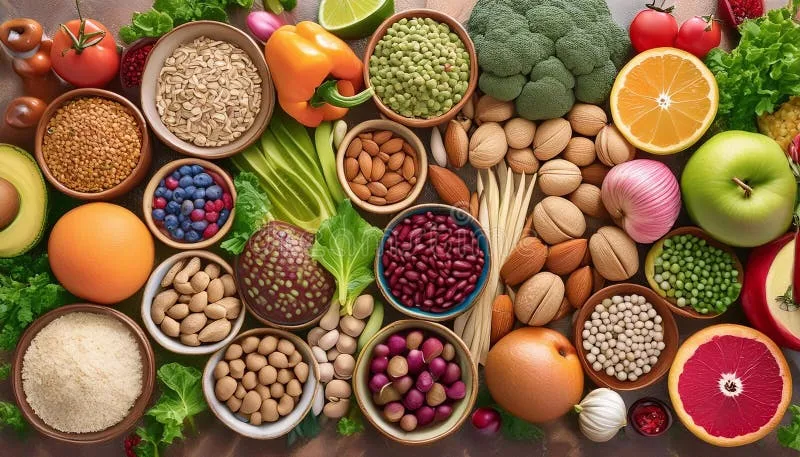
Stop Punishing Your Palate: Why Loving Your Food Is the Healthiest Thing You Can Do
Let me paint you a picture. It's Monday. You've committed — really committed this time — to eating clean. Lunch is a sad bowl of plain greens, unseasoned chicken breast, and a lemon wedge that's doing its absolute best. You eat it at your desk, half-distracted, vaguely resentful. By 3 p.m. you're elbow-deep in the office snack drawer.
Sound familiar? That's not a willpower problem. That's a philosophy problem.
For years, wellness culture in this country has operated on a flawed premise: that healthy food and enjoyable food are fundamentally in tension with each other. That eating well requires sacrifice, and if it doesn't feel a little punishing, you're probably doing it wrong. But a growing body of research — along with a lot of lived human experience — suggests that this approach doesn't just fail to work. It actively undermines the goals it claims to support.
Your Brain on a Meal You Actually Love
Here's something fascinating: the act of enjoying food isn't just a pleasant bonus. It's a physiological event with real nutritional consequences.
When you anticipate and experience a meal with genuine pleasure, your body triggers the cephalic phase digestive response — a pre-digestive process where saliva, gastric acid, and digestive enzymes ramp up before the food even arrives in your stomach. In other words, looking forward to your food and savoring it actually primes your gut to absorb nutrients more efficiently.
On the flip side, eating under stress, guilt, or distraction suppresses digestive function. The cortisol flooding your system when you're anxious about what you're eating actively interferes with the very absorption you're trying to optimize. That virtuous salad eaten with a side of self-reproach may be delivering less nutritional value than the same salad eaten with genuine enthusiasm.
Neuroscience also tells us that the brain's reward system — specifically dopamine — plays a role in satiety and satisfaction. When a meal genuinely satisfies you, you're less likely to find yourself hunting for something else an hour later. Restriction and joylessness, on the other hand, create a psychological scarcity mindset that tends to backfire in predictable ways.
The Restriction Trap (And Why So Many of Us Fall Into It)
American diet culture has a long history of framing food as a moral issue. Foods are "good" or "bad," "clean" or "guilty." We "earn" indulgences and "cheat" on our diets. This language isn't neutral — it shapes how we feel about eating, and not in a helpful direction.
Research on dietary restraint consistently shows that rigid restriction increases preoccupation with food, heightens the appeal of off-limits items, and often leads to cycles of deprivation and overconsumption. The harder you try to eliminate pleasure from eating, the louder your brain tends to shout about it.
This is why so many people can white-knuckle their way through a "clean eating" month and then find themselves in a completely different relationship with food on week five. It's not weakness. It's biology.
Sustainable healthy eating — the kind that actually sticks over years and decades — tends to look a lot less like restriction and a lot more like preference. People who maintain genuinely nourishing diets long-term usually report that they eat that way because they enjoy it, not because they're forcing themselves.
Flavor Is Not the Enemy of Nutrition
One of the most persistent myths in wellness spaces is that making food taste great somehow compromises its nutritional integrity. That herbs and spices are frivolous. That a good sauce is a slippery slope. That if something is delicious, there must be a catch.
This is just not true — and it's worth saying clearly.
Turmeric, garlic, ginger, and fresh herbs don't just make food more enjoyable. They bring genuine anti-inflammatory compounds, antioxidants, and bioactive nutrients to the table. A drizzle of high-quality olive oil doesn't undermine a vegetable dish — it enhances the absorption of fat-soluble vitamins in those vegetables. Fermented foods like kimchi or a well-made miso add probiotic value alongside complex, satisfying flavor.
The idea that nourishing food must be bland is not only wrong — it's counterproductive. Flavor is one of the primary mechanisms through which we build lasting relationships with foods that are good for us.
What Mindful Dining Actually Looks Like in Real Life
Mindful eating gets talked about a lot in wellness circles, often in ways that feel a little abstract. But practically speaking, it just means being present with your food — and that's a lot easier to do when you're eating something you genuinely like.
A few habits that make a real difference:
Eat without a screen when you can. Not as a rule to feel guilty about breaking, but as an experiment. Notice how much more satisfying a meal feels when it has your actual attention.
Slow down between bites. Satiety signals take roughly 20 minutes to reach your brain. Eating quickly means you often overshoot what you actually needed before those signals arrive.
Let yourself look forward to meals. Planning something you're genuinely excited to eat isn't indulgence — it's strategy. Anticipation primes your digestion and keeps you from arriving at mealtimes in a ravenous, decision-impaired state.
Season your food. Seriously. A pinch of good salt, a squeeze of lemon, fresh herbs — these small moves dramatically change how satisfying a meal feels, which changes how satisfied you feel after eating it.
A Platter Designed for Delight Is Inherently More Nourishing
At Wholesome Platter, we don't think you should have to choose between a meal that's good for you and one that you actually want to eat. That's a false choice, and it's one we're happy to reject.
The most nourishing plate is one you'll eat with enthusiasm, return to consistently, and build a genuine relationship with over time. It's one that respects both your health goals and your humanity as someone who deserves to enjoy what they eat.
Wellness isn't a punishment. It's not a series of sacrifices you accumulate until you've earned the right to feel good. It's a practice — and like any sustainable practice, it works a whole lot better when it brings you joy.
So go ahead. Make the meal delicious. Your body will thank you for it.