Eat More, Crave Less: The Science of Nutrient Density and Why It Changes Everything
Here's a frustrating pattern a lot of people fall into: you decide to eat healthier, so you start shrinking your portions. Smaller plate, less food, more willpower. And for a few days, maybe even a week, it works. Then your body starts pushing back — the afternoon cravings hit harder, you're thinking about food constantly, and by Thursday night you've demolished half a bag of pretzels standing over the kitchen counter wondering what went wrong.
What went wrong is that restriction and nutrition are not the same thing. Your body doesn't just want fewer calories. It wants specific things — vitamins, minerals, fiber, antioxidants, phytonutrients — and when it doesn't get them, it keeps sending hunger signals until it does. That's not a willpower failure. That's biology doing exactly what it's supposed to do.
This is where the concept of nutrient density becomes genuinely useful, not as a buzzword, but as a practical framework for eating in a way that actually satisfies you.
What Nutrient Density Actually Means
Nutrient density refers to how much nutritional value a food delivers relative to its calorie count. A handful of spinach and a handful of crackers might contain similar calories, but the spinach is carrying iron, folate, vitamin K, magnesium, and a decent hit of fiber. The crackers are mostly refined starch.
Your body processes these two foods completely differently — not just in terms of blood sugar response, but in how satisfied you feel afterward and how quickly you go looking for your next meal.
Researchers have found that micronutrient deficiencies, even mild ones that don't show up as a diagnosable condition, can drive appetite. When your cells are running low on certain vitamins and minerals, your brain interprets that as a signal to keep eating. You're not imagining it. The hunger is real, even when the calorie math says you've had enough.
The Volume Advantage
One of the most practical benefits of nutrient-dense eating is that many of the foods involved are also high in water content and fiber — which means they take up physical space in your stomach. This matters more than people realize.
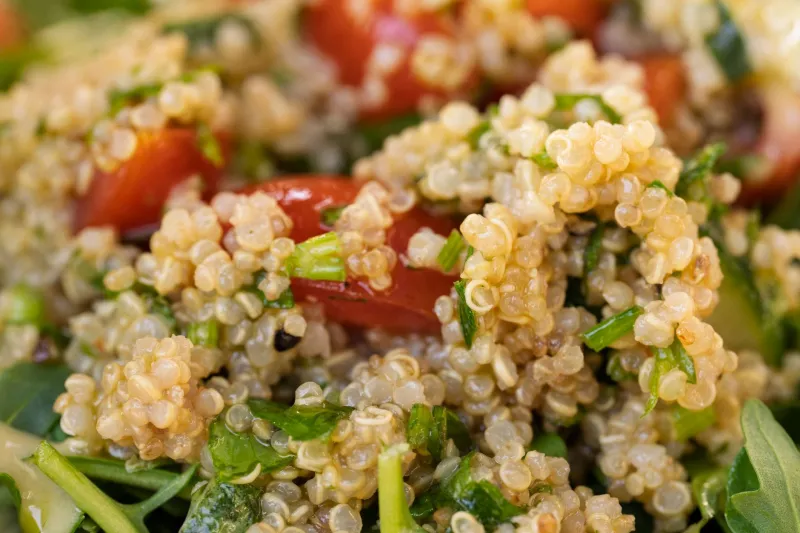
Stretching receptors in your stomach are part of how your body registers fullness. A large salad loaded with leafy greens, cucumber, roasted vegetables, and a protein source physically occupies more space than a small bowl of pasta, even if the calorie counts are comparable. Your body gets both the mechanical signal (volume) and the chemical signal (nutrients), and the result is genuine, lasting satiety.
Contrast that with a low-calorie diet built around processed "light" foods — diet crackers, low-fat yogurt with added sugar, 100-calorie snack packs. You might be hitting a calorie target, but you're not giving your body the micronutrients or the bulk it needs to feel done eating.
The Foods Worth Centering Your Meals Around
You don't need a complicated scoring system to start eating more nutrient-densely. A few broad categories do most of the heavy lifting:
Dark leafy greens — kale, arugula, Swiss chard, collard greens, spinach — are among the most nutrient-packed foods per calorie on the planet. They're not exciting on their own, but they're easy to build around. Toss them into grain bowls, blend them into smoothies, wilt them into soups, or use them as a base for heavier proteins.
Legumes — lentils, black beans, chickpeas, edamame — bring a combination of protein, fiber, and micronutrients that's hard to match. They're also one of the most filling foods you can eat, largely because of how slowly they digest. A bowl of lentil soup keeps most people satisfied for hours in a way that a turkey sandwich on white bread simply doesn't.
Colorful vegetables — bell peppers, beets, purple cabbage, sweet potatoes, tomatoes — each color roughly signals a different set of phytonutrients. Eating across the spectrum isn't just aesthetically pleasing; it's a practical way to cover your nutritional bases without tracking every micronutrient individually.
Fatty fish and eggs bring dense nutrition in a compact package — omega-3s, B vitamins, choline, and high-quality protein. These are foods that genuinely move the needle on satiety.
Nuts and seeds — particularly walnuts, flaxseed, hemp seeds, and pumpkin seeds — add healthy fats and minerals to meals in small quantities that punch well above their weight nutritionally.
How to Build a Meal That Actually Works
The practical shift here isn't about eating less. It's about restructuring what fills your plate so that nutrient-dense ingredients take center stage rather than acting as a side note.
Start by anchoring every meal with a substantial base of vegetables or legumes. Not a small side salad — an actual foundation. Then build on top of that with a quality protein and a source of healthy fat. Whole grains can round things out, but they don't need to dominate the plate.
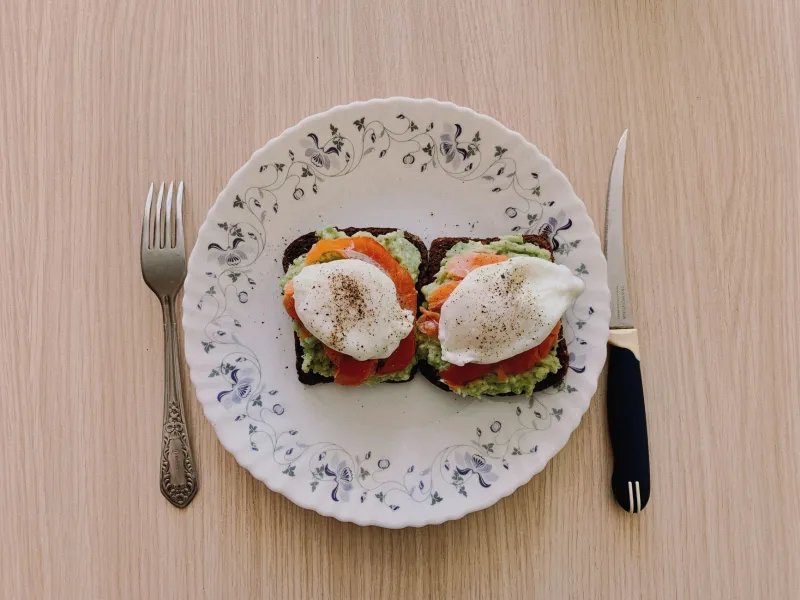
A concrete example: instead of a chicken breast with a small side of broccoli and a big scoop of white rice, try roasting a generous pile of broccoli, cauliflower, and chickpeas with olive oil and spices, then laying the chicken over the top with a drizzle of tahini. You've flipped the ratio without shrinking the meal. The plate looks full because it is full — just full of the right things.
Snacks are another lever worth adjusting. Reaching for an apple with almond butter instead of a granola bar, or hummus with sliced vegetables instead of chips, doesn't feel like deprivation once your body starts responding to the difference in how you feel afterward.
The Longer Game
One thing worth naming: the shift doesn't happen overnight. If your body has been running on processed, low-nutrient food for a while, it may take a few weeks of more nutrient-dense eating before your hunger signals recalibrate. Some people notice they're actually eating more volume at first as their body catches up on deficiencies. That's fine. The goal isn't to eat less on day one — it's to build a pattern where your body eventually asks for less because it's genuinely getting what it needs.
The counterintuitive truth at the heart of nutrient-dense eating is this: the path to eating less often runs straight through eating more — more vegetables, more variety, more of the foods your body is actually looking for. When you stop treating food as the enemy and start treating it as information your cells are waiting to receive, the whole relationship with eating tends to get a lot quieter and a lot easier to manage.
Your plate isn't supposed to feel like a punishment. It's supposed to work for you.